
Criminology
Level 3 Applied Diploma in Criminology (Social Sciences)
 Why Choose Criminology?
Criminology is the study of crime, criminal behaviour, and the systems that respond to it.
If you are curious about why people commit crimes, how society reacts, and the role of law, media, and justice in shaping our perceptions of crime, this course is for you.
Criminology combines theory with real-world case studies, giving you valuable insight into crime prevention, criminal justice, and social change. You’ll examine the causes of crime, how the media represents it, and how individuals and governments respond — developing a deeper understanding of the world around you.
Course Overview – Year 12
In Year 12, you will explore:
-
Types and consequences of under-reported crime such as domestic violence, hate crime, and cybercrime
-
Theoretical explanations for criminal behaviour, including psychological, biological, and sociological perspectives
-
The role of the media in shaping public perceptions of crime
-
How campaigns and policies influence crime prevention and awareness
This year lays the foundation for understanding how society defines and responds to criminal behaviour.
 Course Overview – Year 13
In Year 13, you will apply theory to real-world situations by exploring:
-
High-profile case studies from crime scene to courtroom
-
How media reporting impacts public opinion and criminal justice outcomes
-
The social construction of criminality and evaluation of crime control strategies
-
Planning and designing your own campaign for change based on a chosen crime issue
This year develops your ability to critically evaluate the effectiveness of the criminal justice system in England and Wales.
Assessment
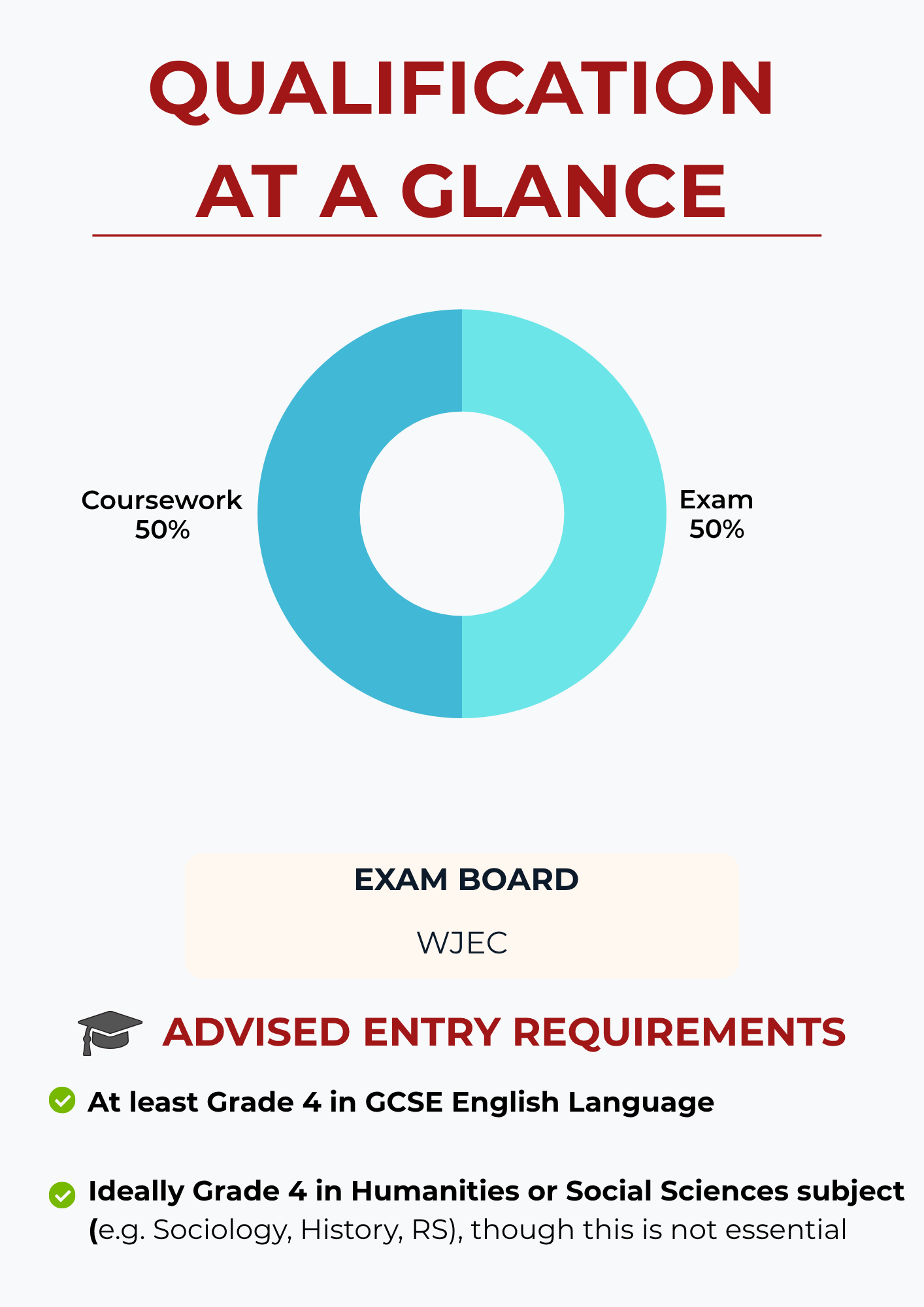
The WJEC Level 3 Applied Diploma in Criminology is equivalent to one A Level and is assessed through:
-
One internally assessed assignment per year – 50% of the final grade
-
One externally assessed examination per year – 50% of the final grade
This balance of coursework and exams ensures you develop both academic and applied skills, ideal for further study or employment.
Why Study Criminology at John Kyrle?
At JKHS, Criminology is taught by passionate and experienced staff who make learning engaging, relevant, and real.
You’ll benefit from:
-
Guest speakers from the criminal justice system
-
First-hand accounts from ex-offenders
-
Insights from victim and witness support services
-
A supportive, discussion-based environment that encourages independent thinking and analysis
Our Criminology students consistently achieve excellent results and leave JKHS with the skills, knowledge, and confidence to pursue higher education or professional careers.
Where Can Criminology Take You?
University
This qualification provides an excellent foundation for degrees in:
-
Criminology
-
Law
-
Sociology
-
Psychology
-
Social Policy
-
Social Work
Careers
Criminology opens doors to a wide range of careers, including:
-
Police Officer
-
Probation Officer
-
Legal Executive
-
Social Worker
-
Youth or Community Support Worker
-
Roles within the Criminal Justice System
Skills for Life
Throughout the course, you’ll develop transferable skills such as:
-
Critical thinking and analysis
-
Research and evidence-based judgement
-
Communication and problem-solving
-
Understanding of law, policy, and social issues
Teaching Staff
-
Miss Billie Smith – Subject Leader (criminology@jkhs.org.uk)
-
Ms Natalie Sorrell
Specification: WJEC ENTRY LEVEL FRAMEWORK SPECIFICATION (eduqas.co.uk)
Qualification at a Glance
Exam Board
WJEC – Level 3 Applied Diploma in Criminology
Assessment
-
50% Coursework (internally assessed)
-
50% Exam (externally assessed)
Structure
-
Year 12: Changing Awareness of Crime & Criminological Theories
-
Year 13: Crime Scene to Courtroom & Crime and Punishment
Entry Requirements
Students should have achieved at least a Grade 4 in GCSE English Language and ideally a Grade 4 in a Humanities or Social Science subject.
Skills Developed
-
Analytical and evaluative thinking
-
Understanding of crime, law, and justice
-
Research and investigative skills
-
Application of theory to real-world contexts
Enrichment Opportunities
-
Guest speakers from the justice sector
-
Links with victim and offender support services
-
Interactive workshops and campaigns for change